


Forget the endless dread from From. Put away the scorched desert of Mad Max: Fury Road. Leave behind the ash snow, the permanent twilight, and Viggo Mortensen’s tangled beard from The Road. Today we’re talking about a different kind of apocalypse. Not the end of the world — the end of accessible knowledge.
Here’s a picture of that apocalypse. This brave new world differs from ours by just one small UX detail — a single change in how we interact with things, that makes everything unrecognizable.
One small detail… Google no longer has a search bar. The internet is still there.
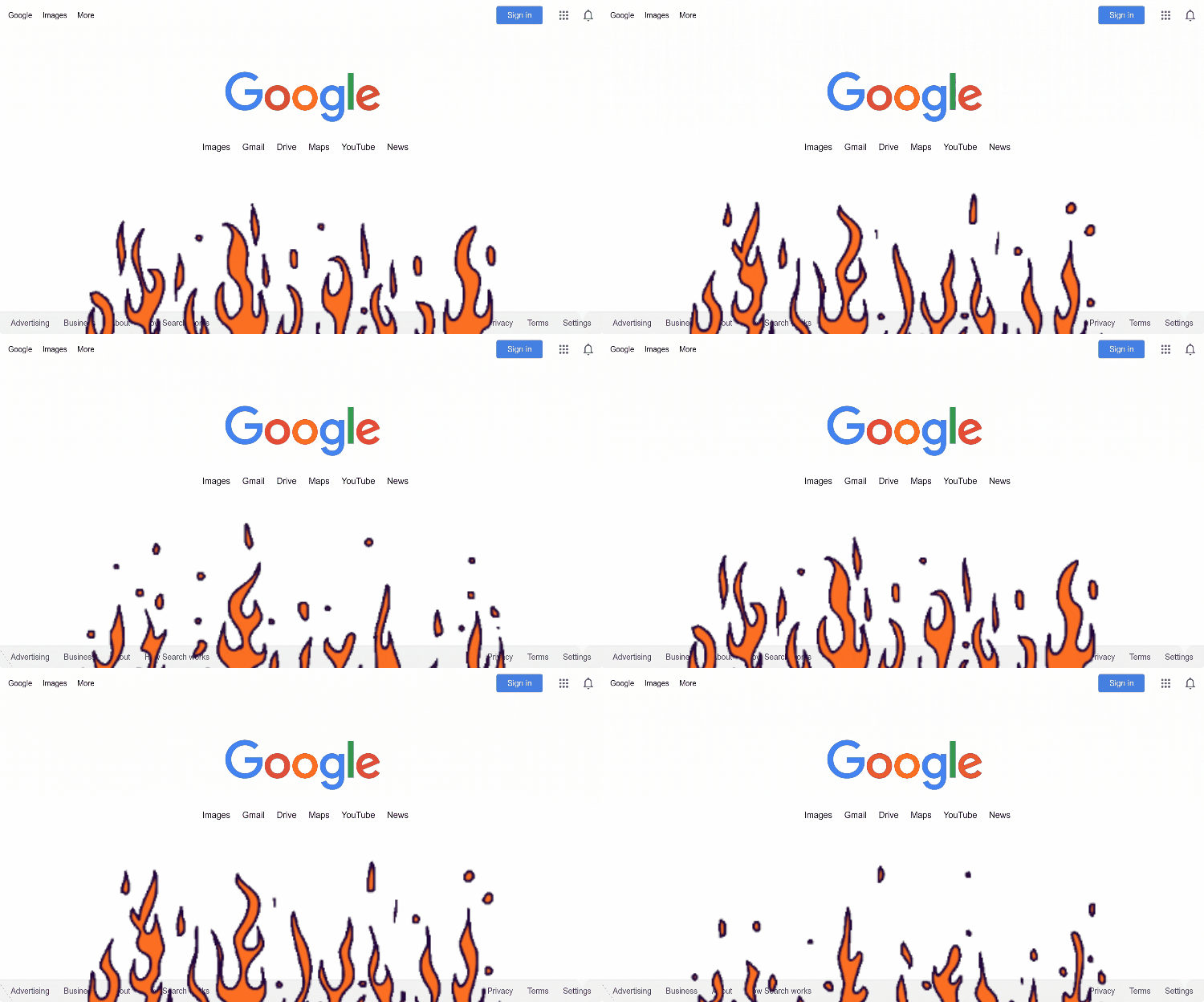
All the knowledge — from great articles, useful research, and favorite films, to pineapple pizza recipes (sorry!) and quotes from Mao Zedong and Bernard Shaw (sorry again!) — is still out there somewhere. And Google is still there. Without the search bar.
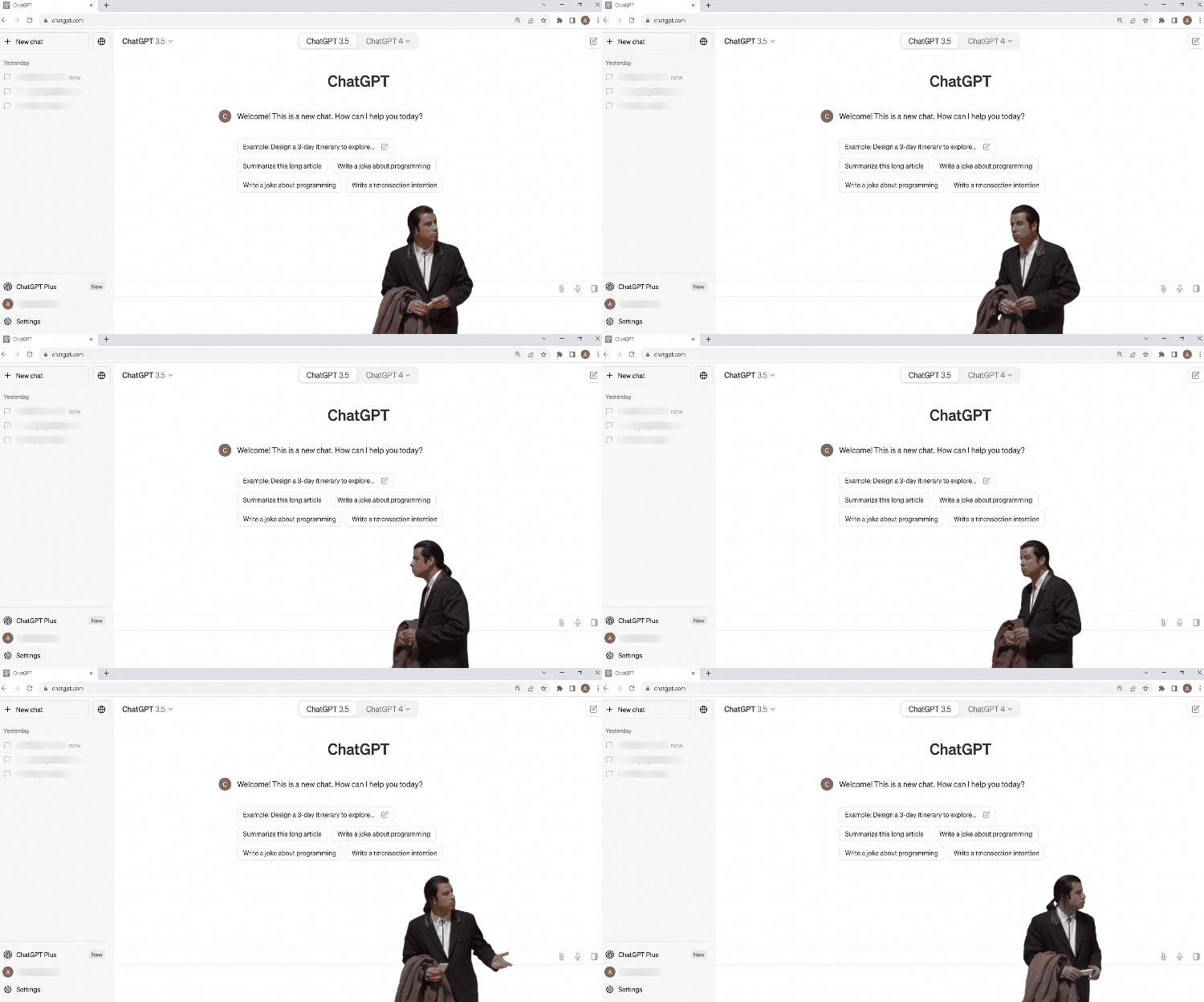
You open your favorite Gippity or Claudie (for something important, or just because you can’t be bothered to write that email yourself), and there it is… The input field is gone. The technology is still there. All the knowledge your AI assistant has access to is still there. Just no input field.
And your Spotify is still there. All 100 million-plus songs are still there. But there are no playlists. No recommendations. Just infinite scrolling.
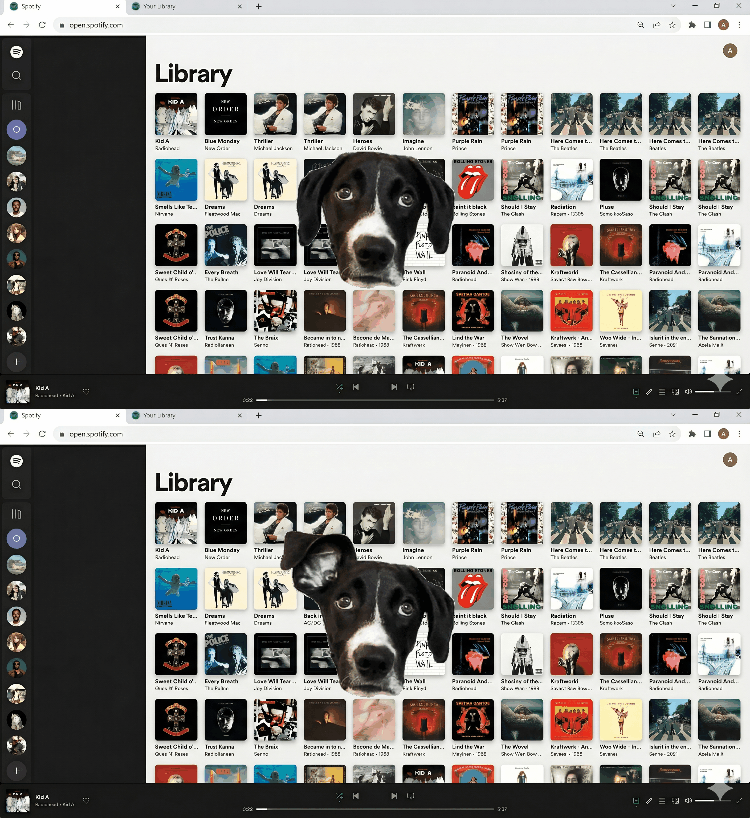

Why am I painting such a terrifying picture for most of us?
To illustrate a very simple point: knowledge becomes a resource only when there is a way to interact with it — delivery, engagement, access.
Knowledge that has no interface and no proactive infrastructure around it exists. But it doesn’t do anything. Not in any broad philosophical sense, and not in any practical one.
Google without a search bar doesn’t erase the fact that all the knowledge is still sitting there in the network. It just stops being a resource. It becomes an artifact — buried behind a wall of screen. Add the search bar back, and knowledge becomes a resource again. A product. A service. Something included in activity, in decision-making, in learning, in pleasure. You name it.
The same goes for any research, any expertise, any article or text without interface and delivery.
Moreover, what we actually pay for is the ability to interact with quality knowledge. Grants, subscriptions, institutional budgets… We don’t pay for knowledge itself. We pay for access to it.

And very often, whoever builds and controls the interface of knowledge (from actual web interfaces to any other communication format) controls the knowledge itself. Decides what gets shown, to whom, and when.
So what’s the point of all this?
In this context, I believe there are two things worth keeping in mind.
First. All the knowledge and expertise your organization holds and produces require an interaction infrastructure, diversified interfaces, channels, and formats. A file uploaded to a website, or a Facebook post with a link, is not an interface. At best, it’s a way of telling yourself the work is done when the work hasn’t even started.
Second. Building the interface for your expertise is not the job of the researcher or the expert. Not their exclusive responsibility. It’s the job of those who work with knowledge infrastructure — organizations, institutions, and departments.
Don’t push experts to communicate. Don’t blame them if you don’t succeed in knowledge communications.
Build conditions in which the audience can interact with knowledge, and make it easy and clear for the expert to step in when needed.
And remember, a small knowledge apocalypse in your organization doesn’t look scary.
It looks like a very well-written report that nobody opened.
