Taming the Team Routine: Reflections on small teams and the forgotten maintenance from a broken elevator.
On how to make routine part of small-team work

Today, I got stuck in an elevator. For the first time in my life, actually.
So, there I was, sitting in the elevator waiting for a technician to come and rescue me. As I sat there, I realized our elevator had been acting up for quite a while. It’s been “glitching” forever.
And yet, no one ever fixed it. But the moment a human being got stuck inside, help and repairs arrived in 30 minutes! Mind you, we’re in the middle of heavy snowfalls; getting anywhere takes time, patience, and (above all) necessity or at least a very strong desire.
We’re all good at fixing things. We excel at the urgent. Sometimes, we even manage to do the important.
But there are certain types of tasks that we avoid in teams, much like that preventive elevator maintenance. Small teams (and I’m specifically talking to generalists in small initiatives) suffer from this “disease” the most.
We’re a bunch of generalists here. What did you expect?
The invisible to-do list (some examples)
Updating information
Refreshing the website, updating the Privacy Policy, etc.
I just don’t have the time or focus to surface from operations or strategic planning to realize that our website still features a “New Employee” announcement from November 2024 (for someone who has already quit because we forgot to update him, I suppose 😇).
Follow-ups of follow-ups
You launched? Finished an event? Time for a debrief. You discussed it, took notes. See you at the next follow-up?
But how do you actually integrate what was discussed into the next plan?
How do you remember (!!!!), while planning the next project, that you agreed never to work with that specific contractor again?
Feedback and reflection
The best among us run surveys and genuinely care about feedback. But what’s next? That beautiful chart stays in your head until Thursday, because on Thursday something else inevitably breaks, and you lose track of the data everything.
Documentation and manuals
I’ll admit it: I recently made a step-by-step guide for a new colleague on our event launch workflow. You know, how the website connects to the registration platform, mailings, and social media. I felt so satisfied.
Except that colleague isn’t “new” anymore — she has been running events with us for six months already.
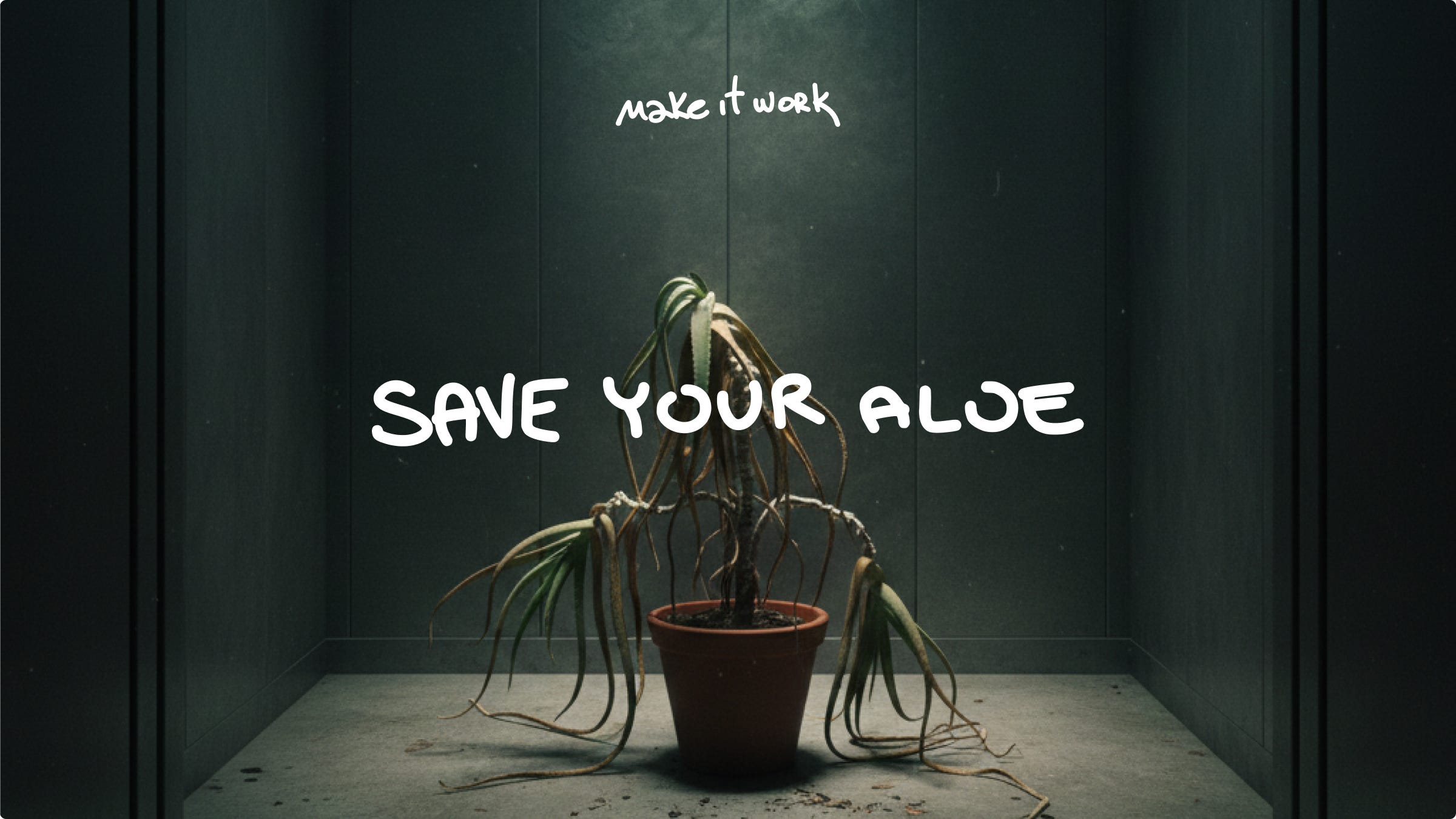
Watering the office plants!
Full disclosure on this one: my colleague actually drew me a poster that says “Aloe Killer,” and it’s now hanging on my office door.
What to do? Lessons from the endless struggle
1. Accept the truth
These tasks will never feel “convenient”. You will never suddenly love them. They will always feel misplaced.
We’re in the middle of a fundraising gala, a new feature launch, or a quarterly budget review… there is never a “good” time for routine.
It’s just routine. Deal with it.
2. Use triggers
These tasks shouldn’t rely on your willpower, even if you have one.
They work best when they are built into your workflow as dependencies.
Set this up in your Asana, Trello, or ClickUp.
Event finished → Trigger: immediate follow-up + logging decisions.
Project launched → Trigger: website info update.
New hire starts → Trigger: documentation (even if it’s a “rough draft for now”).
3. Responsibility rotation
In small teams, documentation is often “nobody’s job.”
Introduce the role of the “Process Warden” or “The Gardener.”
This role rotates weekly or monthly.
The Gardener doesn’t do strategy; they pull weeds. They check links, update dates, and water the aloe. When it’s an assigned role rather than an “extra chore,” it gains legitimacy.
4. The Decision Log
The problem with reflections, for example, is that we treat them like the finish line. But it’s not.
Create a simple table or a Notion page dedicated to one thing:
“What we decided to never do again.”
Make reviewing this log the very first task on the checklist for any new project.
5. Maintenance Day
Once a month or once a quarter, host a Maintenance Day.
No meetings. No new tasks.
The whole team focuses exclusively on “tails”: updating the Privacy Policy, cleaning the mailing list, or freshening up manuals.
6. MVP documentation
Generalists often suffer from perfectionism: “If I’m going to write a guide, it has to be perfect.” Consequently, it never gets done.
Write “dirty” instructions. A screenshot with a red arrow in Slack is documentation. A Loom screen-recording explaining a task is documentation. Just put it all in one folder named “How We Work.”
And the very last point (in case you still think I’m a monster because of the Aloe-case)
I did find a tip that saved my second Aloe plant.
I asked an expert: “How often should I water this?”
They said: “Once every two weeks.”
Now, I have a recurring milestone in Asana: “WATER THE ALOE.”
If I see it in the morning in My Tasks section, I just go and water it, I click “complete,” and I forget about it until the next ping.
So far, the Aloe is alive and well. Proof ↓