


Let’s take a break from frameworks, infrastructures, and dissemination models. I have a public talk to run tomorrow 😄, so let’s talk about something more practical: why and how to design a public event with real audience participation, for those of you who work with knowledge, expertise, and the people you’re trying to reach.
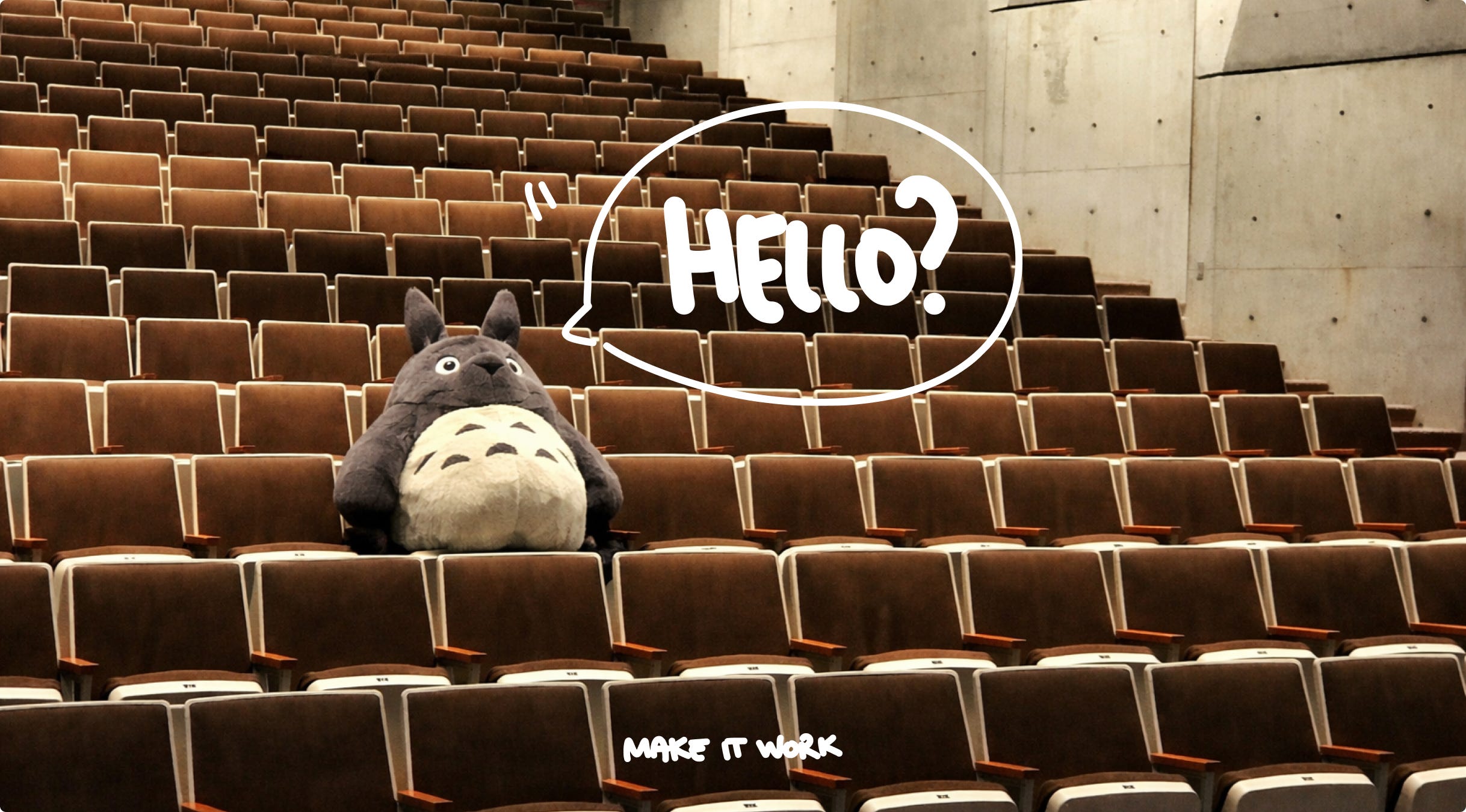
Most panel discussions at conferences are designed like a fashion show. You’ve been there (at conferences, of course) so you know the picture.
There’s a stage where something interesting is happening. There’s an audience watching. The line between them is clear and almost impossible to cross. You can look. You can react - clap, smirk, doze off. But influence what’s happening? No chance.
And this isn’t just on the organizers (that part is obvious, it’s just easier to build it that way). The speakers are complicit too — happily talking to each other while the audience sits there, checked out or scrolling their phones.
Recently, I was at a conference on journalism and media trust. I sat through several panel discussions and public talks where the speakers (sharp suits, impressive credentials) spent an hour and a half talking to each other. And from where I sat, they seemed to be enjoying it. Which is sad.
What’s wrong? Pretty much everything
No engagement
Most panels, research presentations, and public engagement events are designed for one-way communication. Information flows from the stage to the room. There’s no challenge to what’s being said, no pushback, no real friction. Without dialogue, nothing develops (not the ideas, not the audience, not the experts themselves).
The same experts, the same perspectives
Talking about journalism? Here are four media professionals on stage. Which means, in all likelihood, four roughly similar takes on the same problem.
One-off by design
The quality of participation comes through practice. One event doesn’t build anything. People need repeated exposure to a format before they know how to use it. A single panel discussion doesn’t teach an audience how to engage. Running public dialogues connected to our own research activities, we’ve seen it directly: the format gets better, and so does the depth of participation — from event to event, on both sides of the room.
Moderation as control
At best, moderators manage time and keep things on topic. That’s not moderation — that’s traffic management. Real moderation creates conditions for participation, brings different voices into the room, and holds space for productive discomfort.
What works?
Expert diversity
The choice of experts is not just filling slots with names and titles. It’s a decision that shapes what kind of conversation you’re going to have. Four professionals from the same field will most likely give you four versions of the same worldview.
Real diversity means different forms of expertise, not just different opinions. If you’re discussing immigration, don’t just bring researchers and policy people. Bring a government official, a human rights lawyer, a journalist, and a teacher working with children with immigrant backgrounds.
Each of them knows something the others don’t, and that’s what makes the conversation impossible to predict, which is exactly the point.
One more thing worth building in deliberately: a lived experience speaker, someone who has been through it. A person with direct personal experience of the topic brings a category of knowledge that no amount of research can replicate. And they often say the thing that shifts the entire conversation.
Moderation as participation design
A moderator is not an extra expert. And definitely not the star of the evening.
I’ve seen public talks where a well-prepared moderator spent twelve minutes on an opening statement and asked questions as if the microphone was their personal stage. That’s not moderation. That’s a panel with one more panelist who controls the mic.
Moderation is a function; its job is to create conditions that allow different people to speak. A good moderator ensures participation, enforces the rules of engagement, limits those who dominate, and keeps everyone in the room feeling safe.
Rules and formats
Give speakers enough time to establish positions and create some tension, but no more than half the total time. At least the second half belongs to the room and dialogue. This is when the audience is ready: they’ve heard enough to have questions, disagreements, or something to add. That’s the moment to open it up.
A few formats that help:
Erätauko / Time out dialogue: a Finnish dialogue method built on a simple but radical premise: the goal is not agreement, it’s understanding. Participants speak in turn, without interrupting or trying to convince each other. There’s no debate, no winning. The method is specifically designed to invite people who don’t usually take part in conversations, which makes it particularly useful when you want the audience to speak. Works well as a structured closing segment where the room speaks on equal terms with the experts.
Chatham House Rule: what’s said in the room can be shared, but not attributed to anyone. Frees up both speakers and the audience. People say things they wouldn’t say on the record.
Articulate your rules: whatever format, tool, or rules you choose, the moderator needs to explain them clearly to everyone in the room. The rules are better not just announced but also displayed on screen and/or printed on cards left on the chairs. And the rules need to be enforced. Ignoring them undermines the format, the event, and the organizers.
Venue and setup
The physical space sets the rules of participation. Experts on a stage elevated above the room make one thing clear before anyone speaks: some are here to talk, others to watch. The space dictates the roles.
Remove the stage. A stage is a symbol of power. Can’t remove it? Choose a venue where the stage doesn’t rise above the audience.
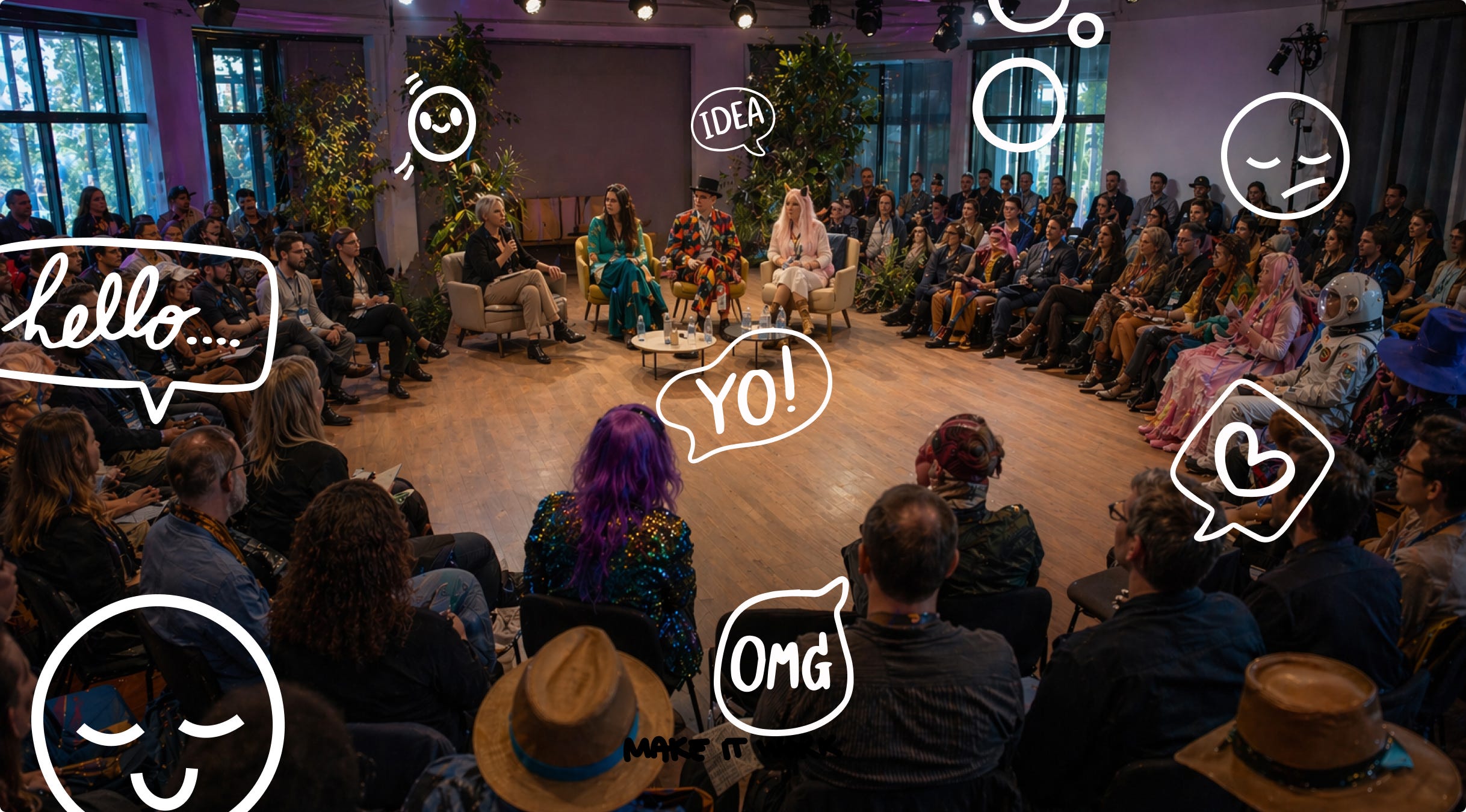
Theatre-style seating works poorly. A semicircle around the speakers works better. People in the room should be able to see not only the speakers but also each other.
The goal in all of these is the same: everyone in the room should feel like a participant in something, not a spectator at something. That feeling is also produced by the physical environment. Where people sit, whether they can see each other, and whether there’s a clear hierarchy built into the layout.
One more thing that’s easy to underestimate: venue quality signals to everyone that the conversation matters. Good speakers are more willing to show up and then to talk about where they showed up. And the audience arrives already feeling that what’s about to happen is worth their attention. That’s not vanity. That’s the infrastructure of dialogue and commitment.
A few more things that matter
Don’t close the loop: The conversation doesn’t end when people leave the room. Send a follow-up: a short summary, key themes that came up, and a feedback poll.
Build a series, not an event: Participation is a skill. It develops through repetition. A single public talk doesn’t teach an audience and speakers how to engage. The second event in a series is always better than the first. People know what to expect, they come with questions already forming, they trust the space and you a little more. If you’re serious about engagement, you’re serious about continuity.
Feed people! Brains need fuel. Sound trivial? Food and drink before or during an event changes the social dynamics of the room - people talk to each other, the atmosphere loosens, and the threshold for participation drops. It’s one of the cheapest and most reliable tools available.
Photography and a way out: Tell people at the start that photos will be taken. Then give those who don’t want to be photographed a sticker - something visible they can wear so that whoever is selecting photos afterward knows not to include them. No awkward conversations, no opt-out forms. Just a simple system that respects people’s choices without making it a production.
Your event is not a final destination
A well-designed public event is worth more than the hour it takes. But only if you treat what happens before and after as part of the event itself.
Before the event, don’t just announce it. Build context. Use your channels (social media, newsletters, blog posts, whatever you have) to introduce the topic, present the speakers, and show different angles of the question you’re going to explore. Give people something to think about before they walk in the door.
After the event, a post with photos and thank-yous is not enough. Write something substantive — not a recap of how well everything went (we can leave that energy for LinkedIn for now), but something that carries the conversation forward. The sharpest questions that came up. The things that didn’t get answered. The tension that stayed in the room. Publish it, send it, talk about it.
This is how a single event becomes part of something larger.
Every touchpoint before and after reinforces the same conversation, reaches the same audience through different moments, and builds the kind of familiarity that turns a passive audience into actual participants. Done right, your public talk doesn’t just generate knowledge and experience in the room, but pulls the right people into an ongoing dialogue between your organization and the people it’s trying to reach and engage.
How did the moderation gig go?
Now make one for SS live with another person. Rules, who is doing what, that sort of things ;)